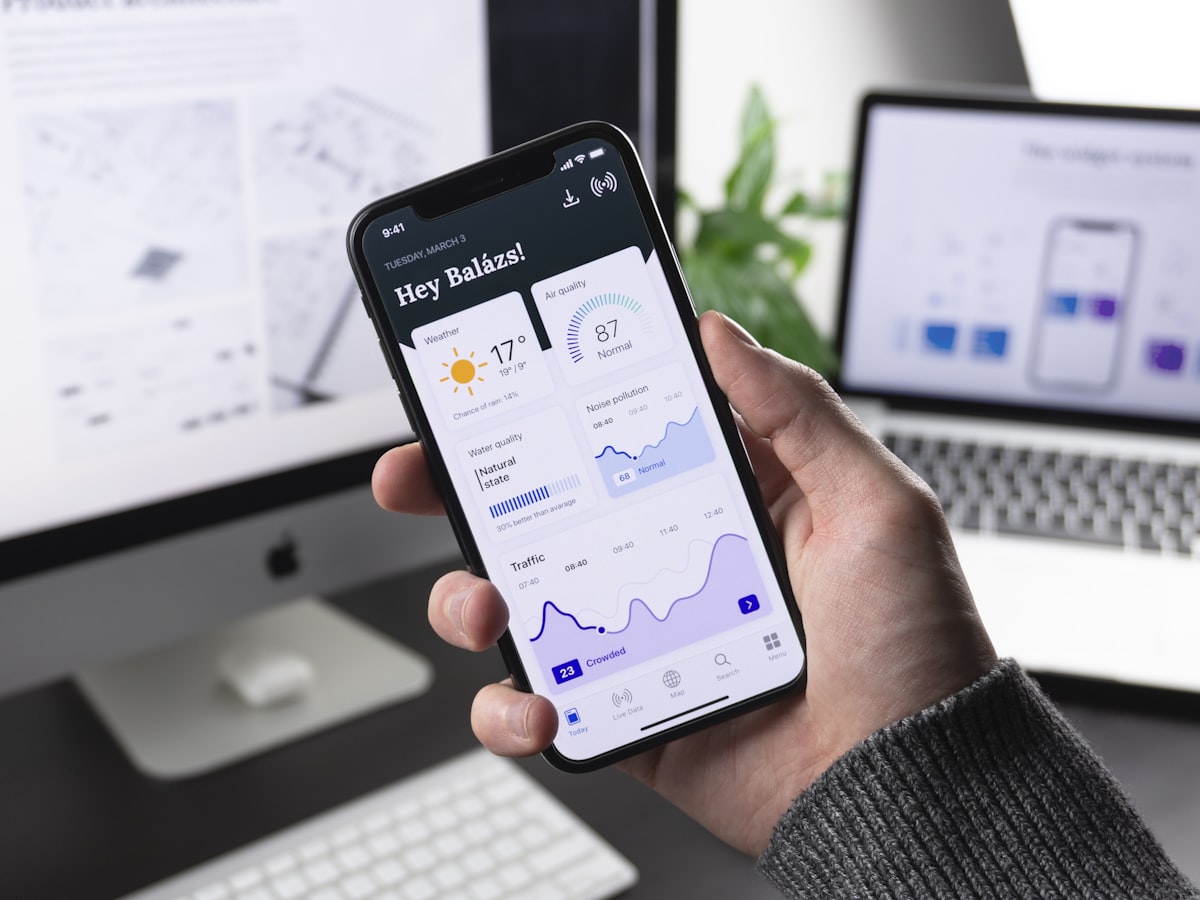

Progressive Web Apps deliver native app experiences through the browser: no App Store, no downloads, no platform-specific development. Lebanese businesses using PWAs are cutting app development costs by 60 to 80% while reaching more users. This guide covers what PWAs are, when to use them, and how to build one in Lebanon.
Progressive Web Apps for Lebanese Businesses: Why PWAs Beat Native Apps in 2026
Progressive Web Apps deliver app-like experiences through the browser without requiring users to download anything from the App Store or Google Play. Lebanese businesses launching PWAs in 2025 and 2026 report 60 to 80% lower development costs compared to native apps, faster deployment cycles, and broader reach across devices. This guide explains what PWAs are, when they make sense for Lebanese businesses, what they cost, and how to decide between a PWA and a traditional native app.
What is a Progressive Web App and how does it work?
A Progressive Web App is a website built with modern web technologies that behaves like a native mobile app. When a user visits your PWA in their browser, they can install it to their home screen with one tap. Once installed, it opens in full-screen mode without browser chrome, sends push notifications, works offline, and loads instantly, exactly like a native app. See also: Building Offline-First POS Systems in Go with SQLite for the topic-specific playbook.
The key difference from a traditional website: PWAs use service workers (background scripts) to cache content, handle offline functionality, and manage push notifications. The key difference from native apps: PWAs run in the browser and work across all platforms, iOS, Android, Windows, Mac, from a single codebase.
For Lebanese businesses, this means one development effort reaches every platform. No separate iOS and Android teams, no App Store approval delays, no 30% App Store commission on transactions.
When should a Lebanese business choose a PWA over a native app?
The decision comes down to three factors: functionality needs, budget, and speed to market.
Choose a PWA when:
Your app is primarily content, commerce, or service-based. News sites, e-commerce stores, restaurant ordering systems, booking platforms, and business directories all work exceptionally well as PWAs. RTYLR, Voxire's commerce platform, uses PWA architecture for restaurant ordering specifically because it eliminates the app download barrier.
You need to launch quickly. A PWA can be live in weeks. A native app typically takes 3 to 6 months from start to App Store approval. Lebanese businesses that need to test a digital product fast should default to PWA first.
Your budget is limited. Building and maintaining separate iOS and Android apps costs 2 to 3 times more than a single PWA. For Lebanese SMEs with realistic budgets, PWAs deliver far more value per dollar spent.
You want to avoid App Store politics. Apple and Google reject apps for unpredictable reasons and take weeks to review updates. PWAs deploy instantly with no approval process.
Choose a native app when:
You need deep device integration. Advanced camera features, Bluetooth connectivity, NFC payments, or complex background processing still require native code. Most business apps do not need these features.
App Store presence itself is a marketing channel. Being discoverable in the App Store matters for certain consumer categories: games, fitness, productivity tools. For most B2B and service businesses, App Store discoverability is minimal.
You are building a long-term platform. If you expect millions of users and plan to invest in the app for years, native development gives you maximum control and performance.
For most Lebanese businesses in 2026, PWAs are the right starting point. You can always build a native app later if the PWA proves the concept.
How much does building a PWA cost in Lebanon?
Realistic 2026 costs for Lebanese PWA development:
Simple PWA conversion of an existing website: 1,500 to 4,000 USD. Adds service workers, offline caching, home screen install, and basic push notifications to an existing responsive website. Appropriate for content sites, blogs, and simple business sites.
Custom PWA for e-commerce or booking: 5,000 to 15,000 USD. Full custom design, shopping cart, payment integration, user accounts, order management. Comparable to a mid-tier e-commerce website with added PWA functionality.
Enterprise PWA with advanced features: 15,000 to 50,000 USD. Multi-language support, complex backend integration, real-time features, advanced analytics, CRM integration. Appropriate for larger Lebanese businesses or restaurant groups needing sophisticated ordering and management systems.
Compare these costs to native app development in Lebanon: 8,000 to 25,000 USD per platform (so 16,000 to 50,000 USD for both iOS and Android), plus 15 to 30% annual maintenance costs. The savings are significant.
For broader context on web development costs in Lebanon, see web design costs in Lebanon.
What features can PWAs deliver for Lebanese businesses?
The most valuable PWA features for Lebanese business contexts:
Offline functionality. Lebanese internet connectivity can be unreliable. A well-built PWA caches critical content so users can browse products, read content, or review their order history even without internet. When connectivity returns, the PWA syncs data automatically.
Home screen installation. Users install your PWA with one tap from the browser. No App Store friction, no download size concerns, no permissions screens. The icon appears on their home screen next to native apps.
Push notifications. Re-engage users with timely notifications: order updates, new product arrivals, abandoned cart reminders. Works exactly like native app notifications on Android. iOS support improved significantly in 2023 and continues to strengthen in 2026.
Fast loading. PWAs pre-cache assets and use aggressive performance optimization. A properly built PWA loads in under 2 seconds even on slow connections, dramatically improving conversion rates.
Add to cart and checkout without app download. For e-commerce, this is the critical advantage. A customer can browse, add items, and complete purchase without ever leaving the browser or downloading an app. Conversion rates improve by 20 to 40% compared to forcing an app download.
For Lebanese restaurants specifically, digital menus and QR code ordering explains how PWAs power the modern restaurant ordering experience.
What are the biggest technical considerations for PWAs in Lebanon?
Building a PWA for the Lebanese market requires attention to specific local constraints:
Optimize for slow connections. Not every Lebanese user has fast fiber or 4G. Your PWA must work smoothly on 3G. This means aggressive image compression, lazy loading, and minimal JavaScript weight. Target under 500KB initial load.
Support Arabic language and RTL layout. Any PWA serving Lebanese customers must support Arabic text with proper right-to-left rendering. This is not automatic, it requires intentional CSS and layout work.
Handle payment complexity. Lebanese businesses often need to support multiple payment methods: credit card via international gateways, OMT, Whish Money, cash on delivery, and WhatsApp coordination. Your PWA checkout must accommodate this complexity smoothly.
Test on low-end Android devices. Many Lebanese users have budget Android phones with limited RAM and processing power. Test your PWA on devices like Samsung Galaxy A series to ensure performance is acceptable across the market.
HTTPS is mandatory. PWAs require HTTPS. This is non-negotiable. If your website still runs on HTTP, you must migrate to HTTPS before a PWA is possible.
How do you convert an existing Lebanese business website into a PWA?
The conversion process for an existing website:
Step 1, Audit current site performance. Run your site through Google PageSpeed Insights and Lighthouse. PWAs require strong performance fundamentals. If your site scores below 70 on mobile, fix performance issues first.
Step 2, Implement service worker. This is the core of PWA functionality. The service worker caches assets, handles offline mode, and manages background sync. For Lebanese businesses without in-house developers, this is where you hire a specialist or agency.
Step 3, Add web app manifest. A JSON file that tells browsers how to install and display your PWA: app name, icons, colors, display mode. Takes 30 minutes to configure properly.
Step 4, Implement offline fallback. Decide what happens when a user opens your PWA without internet. Show cached content? Display an offline message? Queue actions for later sync? This requires strategic decisions, not just technical implementation.
Step 5, Add home screen install prompt. Prompt users to install your PWA after they have engaged with your site, not immediately on first visit. The timing of this prompt dramatically affects adoption rate.
Step 6, Test across devices. Test on multiple iOS and Android devices, multiple browsers, and various connection speeds. PWAs behave differently across platforms: especially iOS, which has more restrictions.
What mistakes do Lebanese businesses make when building PWAs?
Treating it like a website, not an app. PWAs need app-like navigation patterns, not traditional website navigation. Users expect gestures, smooth transitions, and app conventions once they install to home screen.
Ignoring iOS limitations. iOS supports PWAs but with restrictions. Push notifications work differently, storage limits are tighter, and some features require workarounds. Test on iOS early and often.
No clear install prompt. Many PWAs never show users how to install them. The browser's default install prompt is easy to miss. Add a prominent custom install button with clear value proposition.
Poor offline experience. A PWA that shows a broken layout or generic error message when offline wastes the primary PWA advantage. Design the offline state intentionally.
Not promoting the PWA. Building a PWA is not enough. You must actively tell users to install it and explain why. "Install our app for faster checkout" or "Add to home screen for instant access", make the benefit explicit.
Need a PWA built for your Lebanese business?
Voxire builds Progressive Web Apps for Lebanese businesses that need the reach and performance of native apps without the cost and complexity. We handle strategy, design, development, and deployment from start to launch, with ongoing support as your user base grows.
Enjoying this article?
Enter your email and get a clean, formatted PDF of this article: free, no spam.
Voxire
Digital Marketing
Paid media, SEO, content, and lifecycle marketing across MENA. Google Ads, Meta, TikTok and Snapchat, measurement that survives the loss of third-party cookies, and campaign structures built to be audited rather than admired.
Learn more