Most MENA companies running operations at scale have accumulated a set of spreadsheets, WhatsApp groups, and manual processes that are costing them more in operational overhead than a proper internal tool would cost to build. Here is how to approach internal tool architecture for operational businesses in Lebanon and the Gulf.
Most companies running operations at scale in Lebanon and across the MENA region have accumulated a set of spreadsheets, WhatsApp groups, manual approval chains, and partially-working generic software that collectively costs more in operational overhead than a proper internal tool would cost to build. The moment a business owner realizes they spend two hours every morning processing orders through five different screens to get one consolidated view is the moment they start wondering why this problem has not been solved. It has been. Here is how internal operational tools are actually built and what the architecture looks like.
What internal operational tools actually are
Internal tools are software built specifically for an organization's operational workflows. They are not customer-facing products. The users are the business owner, the operations manager, the warehouse staff, or the kitchen manager. The success criterion is operational efficiency, not retention metrics or conversion rates.
The common categories for MENA businesses:
- Operational dashboards: real-time view of key business metrics without navigating five different systems
- Workflow automation tools: approval chains, purchase order routing, delivery confirmation flows
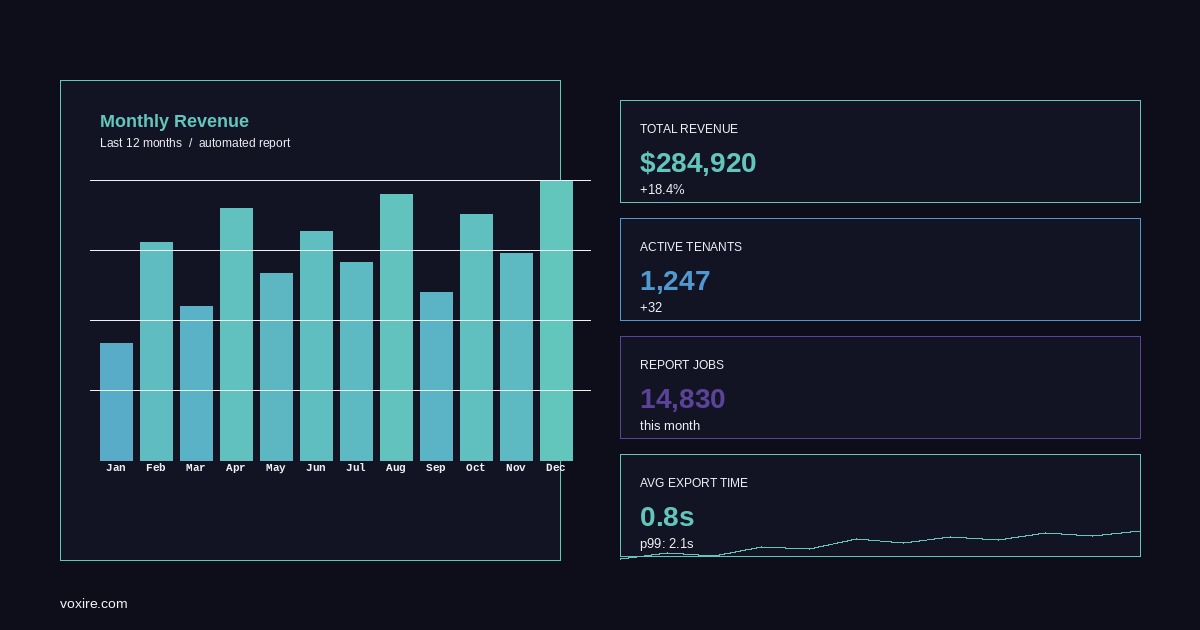
- Reporting systems: daily, weekly, and monthly reports that combine data from multiple sources
- Inventory management systems: stock tracking, reorder triggers, supplier management
- Order management systems: for businesses processing high volumes of orders across multiple channels
- Staff scheduling and attendance tools: labor management for shift-based operations
The key distinction between a proper internal tool and a generic SaaS subscription: an internal tool is built around your specific operational workflow, your specific data sources, and your specific approval hierarchy. A generic SaaS tool forces your operations to adapt to its workflow.
Why generic SaaS tools fail for MENA operational businesses
Generic SaaS tools are designed for the median use case in a Western market. They fail for MENA operational businesses in predictable ways.
Approval flows do not match. A Lebanese distribution company may require the operations manager, the finance controller, and the CEO to approve purchase orders above a certain threshold. The approval sequence is determined by the organizational culture and legal requirements. A generic procurement tool either requires a paid Enterprise tier to customize approval flows or cannot model the specific chain at all.
Multi-currency and payment context is wrong. A business operating across Lebanon, the UAE, and Saudi Arabia deals with LBP, AED, SAR, and often USD simultaneously, with different payment instruments active in each market. Generic tools either have inadequate currency support or charge for multi-currency as an add-on.
Arabic language support in generic tools is incomplete. A tool used by Arabic-speaking staff needs RTL interface, Arabic number formatting in context (reports, invoices), and Arabic date representations. Most Western SaaS tools treat Arabic as an afterthought.
Data export formats do not match local requirements. Lebanese VAT reporting, UAE VAT formats, and Saudi Zakat reporting have specific file format requirements that generic tools rarely support correctly.
The architecture that works for MENA internal tools
For a MENA operational business building an internal tool, the architecture that balances build time, maintainability, and operational fit is a Go backend with a PostgreSQL database and a React admin panel.
The Go backend handles business logic, integrations with existing systems, and report generation. PostgreSQL stores the operational data and provides the query flexibility for reporting. The React admin panel (built with a component library like Ant Design, which has mature Arabic/RTL support) gives the ops team a usable interface without frontend engineering complexity.
For a Lebanese distribution company, the architecture might look like:
- Go API service handling purchase order creation, approval workflows, and inventory updates
- PostgreSQL with schemas for orders, inventory, suppliers, and approval history
- Background worker processing nightly inventory reports and sending them to WhatsApp via the WhatsApp Business API
- React dashboard showing daily order volume, pending approvals, and low-stock alerts
- Integration with the existing accounting software via API or scheduled CSV export
The accounting software integration is the most common complexity. Existing systems like QuickBooks, Odoo, or custom-built Lebanese accounting software have varying API quality. Building the integration as a separate adapter service that handles transformation and retry logic keeps the core business logic clean.
Reporting systems: the highest-value internal tool in MENA operations
For most MENA businesses, the highest-value internal tool is a reporting system that consolidates data from multiple sources and delivers the right information to the right person at the right time.
The pattern that works: identify the three to five decisions that a manager makes every day. Design the reports around those decisions. Deliver the reports proactively (morning email, WhatsApp message, dashboard notification) rather than requiring the manager to log in and pull them.
For a restaurant chain with 15 branches in Lebanon and the Gulf, the daily operations report might include:
- Yesterday's revenue per branch vs. same-day last week
- Top five menu items by sales and their remaining inventory
- Any branch where revenue was more than 20% below the rolling average (potential issue)
- Pending purchase orders awaiting approval
This report takes a developer two to four days to build if the data sources are accessible. The operational value is immediate and compounding: the manager gains two hours per day previously spent pulling this information manually, and the report surfaces anomalies that would otherwise go unnoticed until week-end review.
Building reports as queries against the operational database rather than as application-layer aggregations keeps them maintainable. sqlc-generated query code makes it explicit when a report query changes and ensures it remains consistent with the schema.
Workflow automation for Lebanese and Gulf business processes
Workflow automation in MENA operational contexts has specific characteristics that generic automation tools handle poorly.
WhatsApp as the notification channel. For Lebanese and Gulf operational staff, WhatsApp is the primary communication channel. An internal tool that sends approvals, alerts, and daily reports via WhatsApp Business API reaches staff where they already are, rather than requiring them to check a separate system. The WhatsApp Business API requires a business account and a verified phone number, but the integration is straightforward for outbound messaging.
Phone-based approval flows. Many MENA business owners approve purchase orders via a phone call or WhatsApp message, not through a software UI. An internal tool that surfaces approvals through a mobile-responsive web view that renders cleanly on a phone, with a one-tap approve or reject action, fits the actual workflow. A desktop-only admin panel misses where approvals actually happen.
Offline and unreliable connectivity considerations. For warehouse and kitchen staff in Lebanon, the tool must function in offline mode and sync when connectivity returns. This is the same local-first architecture consideration as POS systems. Staff cannot wait for a page to load when they are in the middle of receiving a delivery.
Build vs buy: the decision framework for MENA internal tools
The buy-first instinct is correct for most software categories. For internal operational tools, it applies only partially.
Buy when a generic SaaS tool covers 80% of the workflow at an acceptable price and the customization needed for the remaining 20% can be achieved through configuration rather than code. For accounting, use established accounting software. For HR and payroll in the Lebanese context, there are adequate local solutions.
Build when the workflow is specific enough that no generic tool covers more than 50% of it, when the tool needs to integrate with multiple existing systems that do not have standard API support, or when the business has enough volume that manual data transfer between systems is consuming significant staff time.
For most Lebanese distribution companies, restaurant chains, and retail businesses operating at scale, the sweet spot is building three to five specific internal tools that address the highest-friction workflows, rather than attempting a comprehensive ERP replacement.
Key lessons from the field
Start with the report, not the CRUD interface. The highest-value internal tool for most operational businesses is a consolidated morning report, not another data entry form. Build the report first and identify the workflow improvements needed to make the data better.
WhatsApp notification integration multiplies the operational value of any internal tool for MENA businesses. Staff and owners actually see the alerts and approvals.
Mobile-first design is non-negotiable for tools used by field staff, kitchen teams, and warehouse workers. Desktop-first internal tools have poor adoption in operational contexts.
Build the integration adapter for existing systems as a separate, isolated service. Accounting software integrations break, APIs change, and import formats evolve. Isolating that complexity keeps the core tool maintainable.
Enjoying this article?
Enter your email and get a clean, formatted PDF of this article: free, no spam.
Not sure where to start?
Voxire designs and builds internal operational tools for MENA businesses, including reporting systems, workflow automation, inventory management, and order management systems for Lebanese and Gulf companies. If your team is spending hours each day managing operations across spreadsheets and WhatsApp groups, we can help you build something better.
Voxire
SaaS Products
Building and running SaaS: Go and PostgreSQL, distributed systems, multi-tenancy, billing, observability, and the production engineering behind RTYLR. Written from shipping our own product, not from reading about it.
Learn more